
Refugees Must Not Be Forgotten
.png/v1/fill/w_320,h_320/file.jpg)
Updated: Oct 2
In the Midst of War and Crisis, We Must Defend Human Dignity
Not long ago, together with a number of other organisations, MEWSo wrote to the new Prime Minister to raise our serious concerns about the continued use of former military sites to accommodate people seeking asylum.
A change of political leadership should have provided an opportunity to reconsider an increasingly restrictive approach to refugees and asylum seekers. Instead, the response we received offered little indication of a meaningful change of direction. The Government continues to expand the use of large-scale accommodation, including former Ministry of Defence sites, as part of its drive to end the use of asylum hotels.

Government guidance describes these as “non-detained” sites, where residents are free to come and go. Yet the fundamental question remains: why should people who have fled war, persecution and repression increasingly be placed in large, isolated and highly managed environments? It has more than a strong whiff of wartime 'internment camp' about it. In August 2026, the Home Office confirmed that three further former MOD sites under consideration could eventually accommodate around 3,750 people.
Contradiction
There is another contradiction here that cannot be ignored. Britain has brought over a limited number of critically ill and injured children from burning Gaza after the genocide by Israel, together with their immediate families, to receive specialist treatment in NHS hospitals. Fifty children were evacuated under this government programme in 2025, and in June 2026 the Government announced that medical evacuations would resume. Those admitted through the scheme receive temporary permission to remain in Britain.
This humanitarian assistance is important. But it also exposes a much larger question. Britain has not established a general, bespoke humanitarian visa route for Palestinians fleeing Gaza; outside of this limited medical evacuation programme, Palestinians must navigate the ordinary immigration system. How can we recognise the desperate need for protection when a child is sufficiently injured to qualify for medical evacuation, yet fail to create a broader route to sanctuary for people fleeing the same devastation?
Where To Seek Safety?
This is not simply a British problem. Across the world, migration and asylum policies are becoming more restrictive, while refugees are increasingly spoken about as a security problem rather than as human beings entitled to rights and protection.
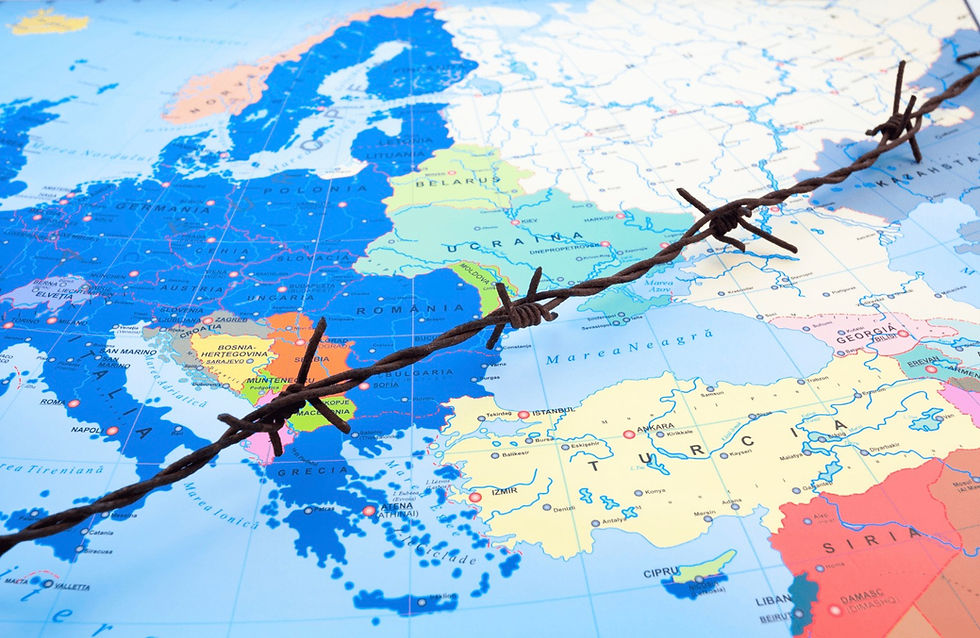
The consequences are visible from Europe to the Middle East and beyond. People escaping persecution are confronted not only by the governments and forces they originally fled, but by borders, legal restrictions, insecurity and political hostility in places they seek safety.
The situation of Iranian political refugees and opposition groups in the Kurdistan region of Iraq is a particularly stark example. Iranian missiles and drone attacks dropping in areas associated with Iranian Kurdish opposition groups continue, leaving communities that have fled this repression facing increased insecurity outside of Iran. For political refugees, in particular, this is not merely a question of accommodation, employment or living conditions. It is a question of physical safety and of the fundamental principle that no person should be returned to a place where they face persecution, torture or a risk to their life.
The Language of Racism
There is a video circulating on social media in Britain that portrays migrants and refugees not as human beings but as a disease contaminating the country, and it calls for Britain’s borders to be completely closed. Whatever legitimate disagreements may exist about immigration policy, this language of racism and dehumanisation must never be allowed to become normal. We should be particularly alert to attempts by far-right and racist movements to exploit poverty, inequality, economic insecurity and social frustration among disadvantaged sections of society, and have them redirect their justified anger towards migrants and refugees who are not the cause of their hardships.
We cannot remain silent in the face of this. Racist hatred must be challenged wherever it is organised and spread — on social media, in our newspapers and on TV, in our streets, workplaces, schools and communities. Where material crosses the legal threshold into unlawful incitement to racial hatred, it should be reported and investigated, and governments and online platforms must be held to account for their legal responsibilities. Civil society must also challenge attempts to make refugees and migrants scapegoats for social ills they did not create.
This is about far more than sympathy. Defending the right to asylum and resisting racism require active, organised and sustained action. We must strengthen organisations defending refugees, hold governments and international institutions to their legal and humanitarian obligations, challenge racist propaganda, and organise against the normalisation of hatred. Wars, economic crises and the major political struggles dominating today’s headlines must not push refugees into the shadows.
Refugees must not be forgotten. Their rights must not be negotiable, their humanity must never be treated as a threat.
Halaleh Taheri
Founder and Executive Director, MEWSo


أهلاً يا أصدقاء! أنا مستخدم عربي للمنتديات، وبدأ اهتمامي بهذا الموضوع عندما سألني أحد الزملاء عن طرق الدفع التي يمكن استخدامها في مواقع الألعاب والكازينو. كنت أعرف Visa بشكل عام، لكنني لم أكن مطلعاً على التفاصيل المتعلقة باستخدامها في هذا المجال. أثناء البحث وجدت وجدت القائمة هنا وبدأت أراجع المعلومات واحدة تلو الأخرى. ما أعجبني هو أنني لم أضطر إلى التنقل بين عدة صفحات لفهم الصورة العامة. كما لفت انتباهي أن بعض النقاط كانت عملية ويمكن الرجوع إليها لاحقاً بسهولة. أحببت أيضاً إمكانية قراءة المحتوى من الهاتف، لأنني غالباً ما أبحث عن مثل هذه المعلومات أثناء فترات الانتظار أو التنقل.